
Officials leave rates unchanged, as expected
WASHINGTON — The Federal Reserve on Wednesday sent a tepid signal that it is done raising interest rates but made it clear that it is not ready to start cutting.
In a substantially changed statement that concluded the central bank’s two-day meeting this week, the Federal Open Market Committee removed language that had indicated a willingness to keep raising interest rates until inflation had been brought under control and was on its way toward the Fed’s 2% inflation goal.
However, it also said there are no plans yet to cut rates with inflation still running above the central bank’s target. The statement further provided limited guidance that it was done hiking, only outlining factors that will go into “adjustments” to policy.
“The Committee does not expect it will be appropriate to reduce the target range until it has gained greater confidence that inflation is moving sustainably toward 2 percent,” the statement said.
While the statement did condense the factors that policymakers would consider when assessing policy, it did not explicitly rule out more increases. One notable change was removing as a consideration the lagged effects of monetary policy. Officials largely believe it takes at least 12 to 18 months for adjustments to take effect.
“In considering any adjustments to the target range for the federal funds rate, the Committee will carefully assess incoming data, the evolving outlook, and the balance of risks,” the statement said. That language replaced a bevy of factors including “the cumulative tightening of monetary policy, the lags with which monetary policy affects economic activity and inflation, and economic and financial developments.”
‘Moving into better balance’
Those changes were part of an overhaul in which the Fed seeks to chart a course ahead, with inflation moving lower and economic growth proving resilient. The statement indicated that economic growth has been “solid” and noted the progress made on inflation.
“The Committee judges that the risks to achieving its employment and inflation goals are moving into better balance,” the FOMC missive said. “The economic outlook is uncertain, and the Committee remains highly attentive to inflation risks.”
Gone from the statement was a key clause that had referenced “the extent of any additional policy firming” that might come. Some Fed watchers had been looking for language to emphasize that additional rate hikes were unlikely, but the statement left the question at least somewhat open.
Going into the meeting, markets had expected the Fed could begin reducing its benchmark overnight borrowing rate as soon as March, with May also a possible launching point.
Policymakers, though, have been more circumspect about their intentions, cautioning that they see no need to move quickly as they watch the data unfold. Committee members in December indicated a likelihood of three quarter-percentage point rate cuts this year, less ambitious than the six that futures markets are pricing, according to the CME Group.
More immediately, the committee, for the fourth consecutive time, unanimously voted not to raise the fed funds rate. The key rate is targeted in a range between 5.25%-5.5%, the highest in nearly 23 years.
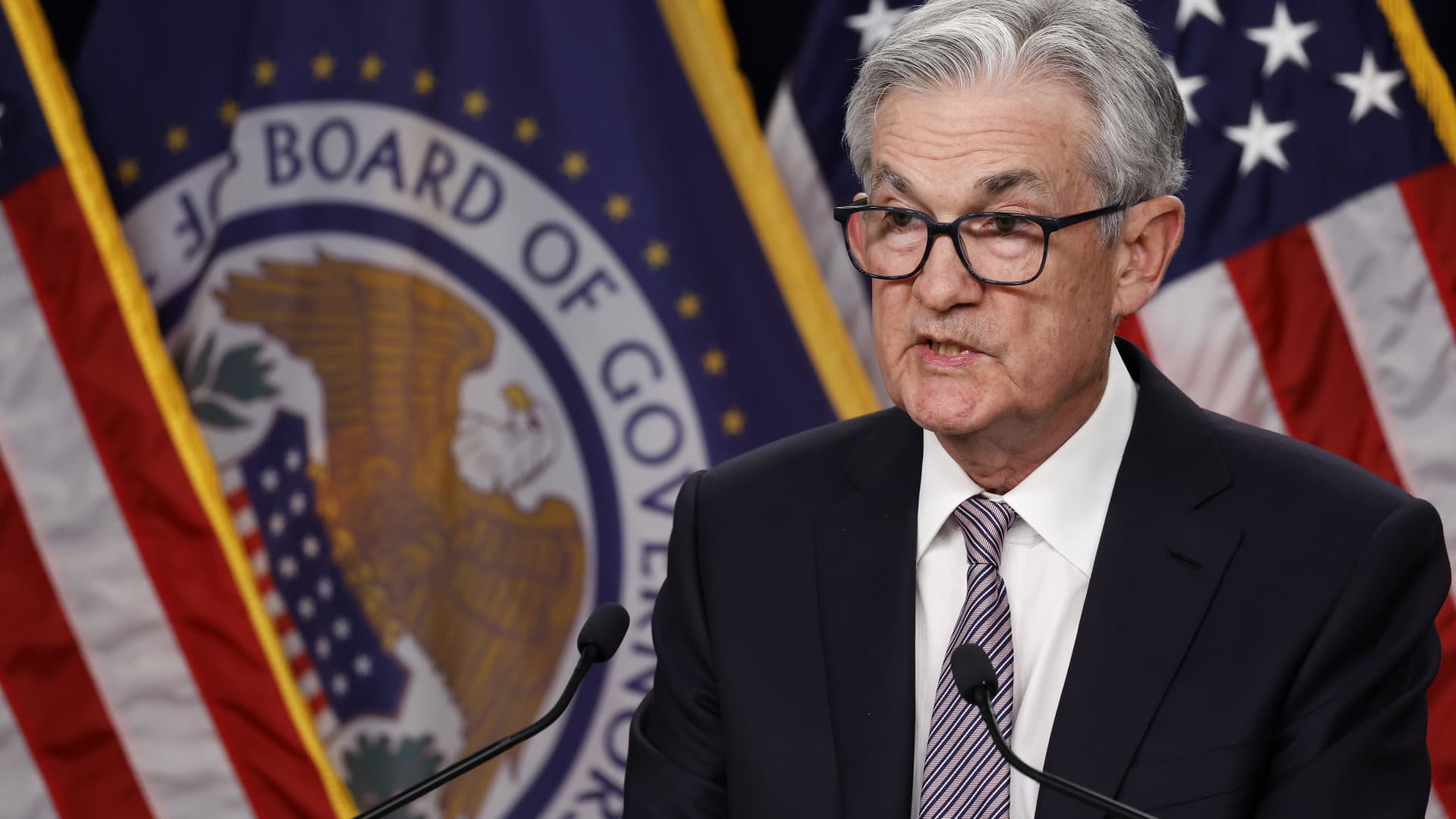
Markets are awaiting Fed Chair Jerome Powell’s news conference at 2:30 p.m. ET for more clues on monetary policy. Immediately after the decision, stocks fell to session lows.
The Fed has been riding a wave of decelerating inflation, a strong labor market and solid economic growth, giving it both leeway to start easing up on monetary policy and caution about growth that could reaccelerate and drive prices higher again. Along with 11 rate hikes, the Fed also has been allowing its bond holdings to roll off, a process that has shaved more than $1.2 trillion off the central bank balance sheet. The statement indicated that the balance sheet runoff will continue apace.
The ‘soft-landing’ narrative
Many economists now are adopting a soft-landing narrative where the Fed can bring inflation down without torpedoing economic growth.
Separate reports Wednesday indicated that the labor market is softening, but so are wages. Payrolls processing firm ADP reported that private companies added just 107,000 new workers in January, a number that was below market expectations but still indicative of an expanding labor market. Also, the Labor Department reported that the employment cost index, a gauge the Fed watches closely for signals of inflation coming through wages, increased just 0.9% in the fourth quarter, the smallest increase since the second quarter of 2021.
More broadly, inflation as measured through core personal consumption expenditures prices rose 2.9% in December from the prior year, the lowest since March 2021. On a six- and three-month basis, core PCE prices both ran at or below the Fed’s target.
In a separate matter, the Fed also announced it was altering its investment policy both for high-ranking officials and staff. The changes expand the scope of those covered to include anyone with access to “confidential FOMC information” and said some staff might be required to submit brokerage statements or other documents to verify the accuracy of disclosures.
The changes follow controversy over multiple Fed officials trading from private accounts at a time when the Fed was making major changes to policy in the early days of the Covid pandemic.