
How Conformal Coating Enhances PcB Printed Circuit Board
PcB Printed Circuit Board
Conformal coating enhances pcb printed circuit board by providing additional protection from operating conditions, thus reducing failure rates and prolonging working life. However, it’s important to choose the right material for the job and apply it correctly to ensure your product has all the benefits you expect. With a wide variety of options available, it can be difficult to know which type and application method are best for your project. That’s why you need the guidance of an experienced PCB contract manufacturer like VSE to help you choose the best conformal coating solution and avoid common manufacturing problems.
A conformal coating is a non-conductive liquid that’s applied as a thin layer to all areas of a pcb printed circuit board, including the substrate, exposed metal, solder joints and components. It’s named because it “conforms” to the contours of each surface, providing maximum protection in a minimal amount of material. The thinness of conformal coating minimizes heat entrapment and unnecessary additional weight, while still offering enough protection to prolong your product’s working life.
In order to function properly, a circuit board needs to be able to disperse thermal energy effectively. But, applying a conformal coating to the entire surface can interfere with this thermal management solution by blocking the paths of heat flow and increasing the overall thermal expansion rate of the board.
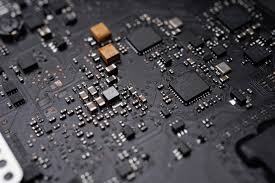
How Conformal Coating Enhances PcB Printed Circuit Board
Some conformal coatings are highly insulating, while others are highly conductive and can disperse thermal energy more effectively. However, these properties can also impact a circuit board’s ability to manage thermal stresses and vibrations, potentially causing mechanical stress or even damage.
There are several different types of conformal coating, with the most common being silicone and polyurethane. They differ in chemical composition and physical properties, but all are designed to protect electronic devices from environmental conditions. Some of these materials have more extreme protective capabilities than others, which may require choosing a specific material for an extremely hot or cold environment, or to address certain environmental concerns such as humidity or corrosion.
The most common methods for applying a conformal coating are automated spraying and manual brushing, both of which can be done during the manufacturing process or afterward. Choosing the right method for your PCB will depend on production throughput requirements, prep work needed and any solvent sensitive components that need to be protected.
The choice of coating material can also be affected by the operating temperature range of the circuit board, as some conformal coatings are more suited to high temperatures than others. Humidity testing is also often required to determine a coating’s resistance, as moisture in the air can corrode metal components and connections on a printed circuit board. Conventional conformal coatings are semi-permeable and don’t fully water-proof or seal the coated electronics, but they provide resistance to environmental exposure and allow for easier rework and repairs. Other encapsulation materials such as parylene coatings, 2-part epoxy coatings and potting compounds are typically used to achieve more comprehensive protection, but they are usually more costly and require more time and effort to apply.