
What Materials Are Commonly Used in the Construction of Flexible PCBs?
Construction of Flexible PCBs
When it comes to flexible printed circuit boards, it’s important to understand what materials are commonly used in the construction of these versatile products. Flex PCBs provide a wide range of electrical connections and eliminate traditional wiring harnesses in many applications. They’re often used to make complex and lightweight designs with a large number of interconnects. However, the most successful flex PCBs require a combination of the right materials to deliver high-quality performance. In this article, we’ll discuss the most common components and materials used in the fabrication of flex PCBs, including popular stackups, copper types, and more.
Flexible PCBs are constructed using a thin insulating base material which is laminated to a layer of copper foil. The copper foil is used to carry the electronic circuits which are etched during the manufacturing process. The circuits are then protected by a thin layer of polyimide, or sometimes another type of flexible dielectric film. These films are often screen-printable and offer excellent flexibility, environmental resistance, tensile strength, and bendability.
The most common conductor material for flexible circuits is copper foil. There are two different types of copper foil used in flex circuits- rolled annealed and electro-deposited (ED). Rolled annealed is more expensive than ED, but it has a better quality – the rolling process elongates the metallic crystal structure and allows it to bend and fold without fatigue fractures. This is a vital property for a dynamic flexible circuit application, where the circuit may be subject to repeated bending and movement.
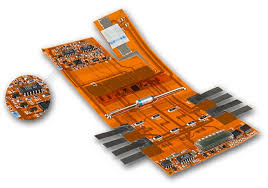
What Materials Are Commonly Used in the Construction of Flexible PCBs?
A flex circuit’s coverlay is the final layer which protects the exposed copper circuitry from environmental conditions, including moisture, pollution, and soldering. Most coverlay films are a combination of polyester (commonly known as Mylar) and polytetrafluoroethylene. These two materials provide excellent insulating properties, while also being very thin and easily etched. The insulating materials are laminated to the copper with epoxy or another epoxy-based adhesive.
Single-sided flex PCBs are the most basic type of flex circuit. These circuits have a single conductor layer on a flex substrate with holes drilled through the insulating film to allow component leads to pass through for interconnection, normally by soldering. Single-sided flex circuits are popular for a variety of consumer-oriented applications, from connecting the signals to the moving print head in printers to powering solar cells on satellites that can be folded up and rolled up before deployment. These thin, versatile products are able to save weight and space, while eliminating wire harnesses that are cumbersome and difficult to install. They’re even used in clothing and accessories to connect sensors to your smartphone or fitness tracker. These versatile circuits are making their way into a variety of other industries as well.